 how-to
How to Tell if Your Roof Needs Replacement
Table of Contents
- Signs You Need a New Roof
- How Long Does a Roof Last by Material
- Roof Repair or Replacement: How to Decide
- What a Professional Roof Replacement Inspection Includes
- How to Safely Inspect Your Roof From the Ground
- What to Do After Finding Roof Damage
- Frequently Asked Questions
Last Updated: October 12, 2026
Signs You Need a New Roof
Your roof protects everything beneath it, and wear and tear eventually compromises that protection. Knowing when your roof needs replacement keeps your home safe and dry.
Most roofs show visible damage long before they fail. Water stains, missing shingles, and sagging spots are red flags. Catching them early saves money and prevents interior damage.
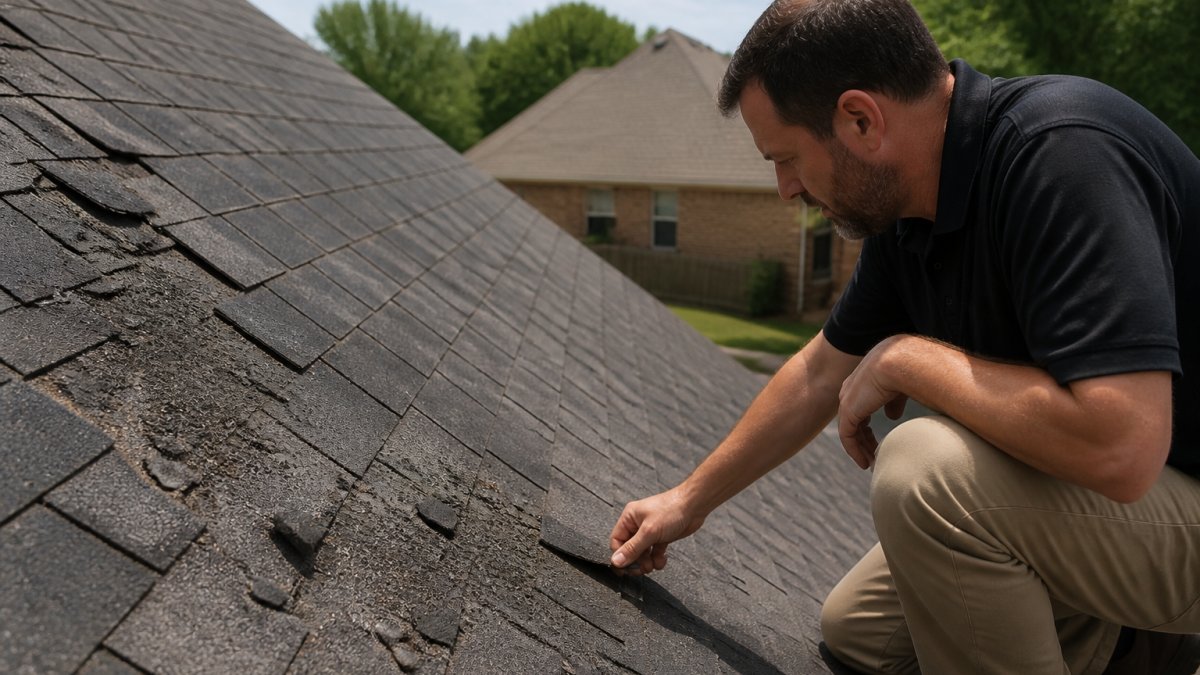
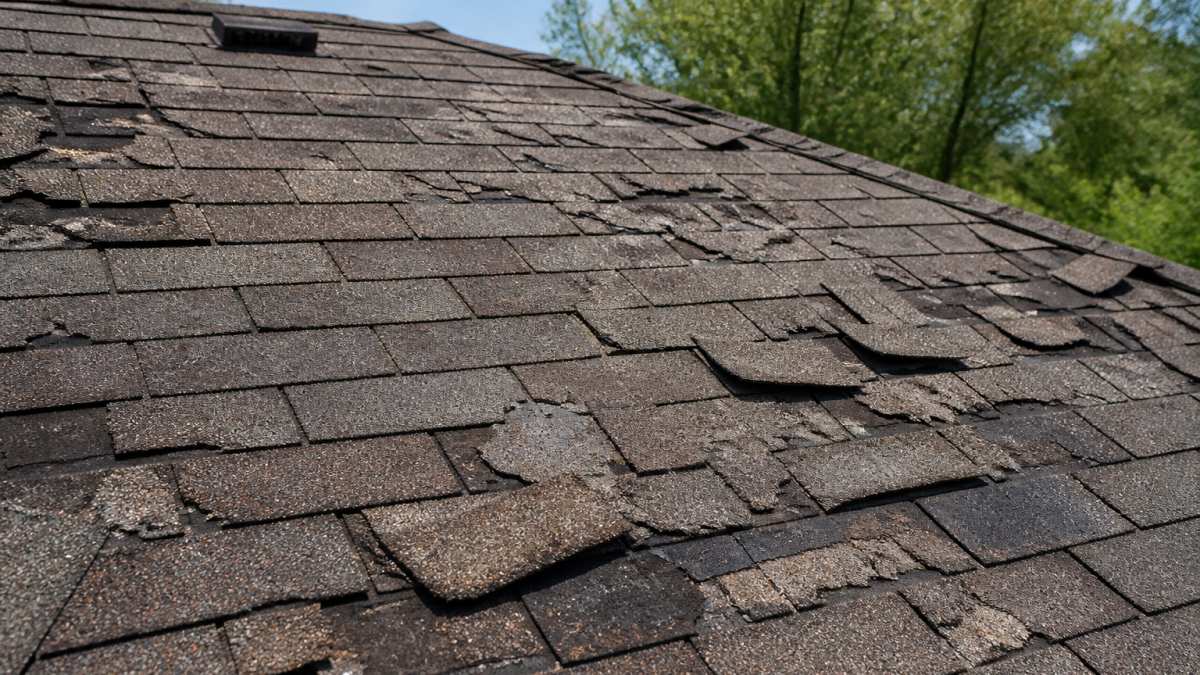
Missing, Cracked, Curling, or Buckling Shingles
Shingles are your roof's first line of defense. When they fail, water gets inside.
Causes vary: high winds tear shingles away, sun causes curling and brittleness, poor ventilation creates moisture that warps them, and age degrades shingles after 15-20 years.
Check gutters and downspouts for shingle pieces and granules, which indicate deterioration.
Roof Leaks and Water Stains Inside
Water stains on your ceiling or attic indicate active leaks or past moisture penetration. The stain may be small, but the damage underneath could be significant.
Look for these water damage indicators:
- Brown or yellow stains spreading across ceilings
- Soft, spongy spots in drywall
- Peeling paint or bubbling wallpaper
Leaks don't always appear directly above the stain, water travels along framing and drips far from the hole. If you spot water stains, get a professional inspection immediately; waiting lets rot spread and mold develop.
Granule Loss and Granules in Gutters
Shingle granules protect against UV rays and weather. As shingles age, granules break free and wash into gutters, a clear aging signal.
Granule loss accelerates near the end of a shingle's lifespan.
Check gutters during and after storms. A small amount of granules is normal; large accumulations suggest your roof needs replacement soon, especially with other damage signs.
Mold, Rot, and Moisture Damage
Moisture trapped under your roof creates ideal conditions for mold and rot, which spread quickly and cause structural damage.
Mold appears as black, green, or brown patches and thrives in damp, poorly ventilated spaces.
Poor attic ventilation contributes: warm, moist air gets trapped and condenses on cold surfaces, feeding mold and wood decay.
Sagging or Structural Problems
A sagging roof is a serious structural issue, the framing can no longer support the weight, often due to water damage, inadequate support, or age-related deterioration.
Look for visible sags from the ground, check for soft spots in attic flooring, and listen for creaking during wind or temperature changes.
Sagging roofs are safety hazards. Interior damage accelerates rapidly. Replacement becomes urgent rather than preventive. Call a professional roofer immediately if you notice sagging.
Damaged or Missing Flashing
Flashing seals gaps where your roof meets chimneys, vents, and walls. When flashing fails, water enters these vulnerable areas. Damaged flashing is one of the most common leak sources.
Check flashing for:
- Rust or corrosion
- Cracks or holes
- Separation from the roof surface
Flashing can sometimes be repaired individually. But if your roof is old and flashing is failing, full replacement makes sense, new flashing installed during roof replacement ensures consistent protection.
Moss, Algae, and Roof Growth
Green growth on your roof indicates moisture retention.
Excessive growth accelerates shingle deterioration by trapping moisture against the surface and promoting rot. It's more common in shaded areas or humid climates.
Regular cleaning removes growth temporarily, but if it returns quickly, your roof likely has moisture or ventilation issues that precede major damage.
How Long Does a Roof Last by Material
"How old is my roof?" is the wrong first question. The right one is "how much service life is left?" Two roofs installed the same year can have wildly different remaining life depending on material, installation quality, attic ventilation, and maintenance. Age alone tells you very little.
Expected Service Life by Material
These ranges reflect typical residential performance. The low end usually means poor installation, poor ventilation, or harsh exposure; the high end means quality installation and consistent maintenance.
| Material | Typical Service Life | Notes |
|---|---|---|
| Asphalt shingles (3-tab) | 15-20 years | Most common; sensitive to heat and attic ventilation |
| Asphalt shingles (architectural) | 25-30 years | Thicker mat, better wind and impact resistance |
| Metal (standing seam) | 40-70 years | Excellent wind and hail performance; finish can fade |
| Metal (exposed fastener) | 20-40 years | Fastener gaskets are the common failure point |
| Wood shakes and shingles | 20-40 years | Requires ongoing maintenance; prone to rot and insects |
| Clay or concrete tile | 50+ years | Very durable; heavy, requires adequate structural support |
| Slate | 75-100+ years | Premium material; installation quality drives performance |
Manufacturer warranties often quote longer numbers than real-world service life. A "30-year" shingle rarely lasts 30 years in a hot, poorly ventilated attic.
What Actually Shortens a Roof's Life
Material is only one variable. These factors move a roof toward the low end of its range:
- Attic ventilation. A hot, poorly ventilated attic bakes shingles from underneath, degrading asphalt and accelerating granule loss. Balanced intake and exhaust ventilation is one of the highest-leverage factors in roof longevity.
- Installation quality. Nail placement, underlayment, flashing detail, and starter course determine storm performance. A poorly installed premium roof can underperform a well-installed mid-grade roof.
- Roof pitch and complexity. Low-slope sections drain slowly and leak more; complex roofs with many valleys, dormers, and penetrations have more failure points.
How to Estimate Remaining Life on Your Roof
Start with the installation date, check closing documents, a permit record, or ask the previous owner. Then adjust:
- Subtract years if the attic is hot in summer, the roof has had repeated repairs, or it faces full afternoon sun with no shade
- Add years if the roof has been professionally maintained and ventilated well, or the material is architectural asphalt, metal, tile, or slate rather than 3-tab
If your estimate puts the roof past 75% of its expected life and you see any warning signs above, plan for replacement rather than waiting for a failure.
Why Local Conditions Matter More Than the Spec Sheet
A shingle rated for 30 years in a mild climate may deliver 18-22 years in a hot, storm-prone region with intense sun and repeated hail. The reverse is also true: a well-ventilated, well-maintained roof in a moderate climate can outperform its rating. When a roofer gives a lifespan estimate, ask what local factors they're adjusting for, that tells you whether it's grounded or just a manufacturer's number.
Roof Repair or Replacement: How to Decide
Most homeowners searching this question already suspect something is wrong. The real question isn't "is there damage?" but "is this damage the kind that comes back?" The decision comes down to four factors: extent of damage, roof age relative to expected lifespan, repair history, and whether the underlying cause has been corrected.
The 25% Rule of Thumb
A widely used guideline: if the damaged area is roughly 25% or less of the roof surface and the roof is in the first half of its expected lifespan, a targeted repair usually makes sense.
This is a guideline, not a rule. A single small leak on a 20-year-old asphalt roof often signals the whole system is at end of life, not that one shingle failed.
A Practical Decision Framework
Work through these questions in order. Stop at the first "yes" that points toward replacement.
- Is the roof past 75% of its expected lifespan? If yes, replacement is usually the better investment, even if visible damage looks minor.
- Has the roof been repaired more than twice in the past three years? Repeated repairs signal systemic failure, not isolated incidents.
- Is the damage spread across multiple slopes or roof planes? Damage in one area is a repair; damage in three areas is a pattern.
- Is the underlying cause corrected? A leak under failed flashing can be repaired. A leak from chronic attic condensation or poor ventilation will return unless the ventilation is fixed, and if decking is compromised, replacement is the only durable fix.
- Is the decking (roof sheathing) soft, delaminated, or rotted? Shingles can be replaced over sound decking; compromised decking means the whole assembly comes off.
- Does the repair cost approach a meaningful fraction of replacement? When a repair quote is a large share of full replacement cost, replacement wins on value.
When Repair Is the Right Call
Repair makes sense when damage is genuinely isolated and the roof has life left:
- A single missing or torn shingle after a wind event
- One failed pipe boot or vent flashing on an otherwise sound roof
- A small puncture from a fallen branch, with no surrounding damage
A competent roofer can often match existing shingles and blend the repair. Ask whether it's covered under any remaining manufacturer warranty, many shingle warranties are voided or reduced by third-party repairs.
When Replacement Is the Right Call
Replacement is usually the honest recommendation when:
- The roof is at or past its expected lifespan for its material
- Multiple damage types are present at once (curling shingles plus granule loss plus a leak)
- The roof has been patched repeatedly and the patches are failing
The Trap of Deferring Replacement
A common pattern: a homeowner repairs a leak, then another eighteen months later, then a third. By the time replacement happens, the decking and sometimes framing have absorbed years of moisture, so the scope now includes sheathing and possibly structural repair. Deferring rarely saves money on an old roof, it shifts cost from roofing to carpentry.
Get the Recommendation in Writing
Ask any roofer who inspects your home to put the repair-or-replace recommendation in writing, with photos. A written recommendation you can compare against a second opinion and keep for insurance or resale is worth far more than a verbal "you need a new roof." If a contractor won't document their reasoning, get another opinion.
What a Professional Roof Replacement Inspection Includes
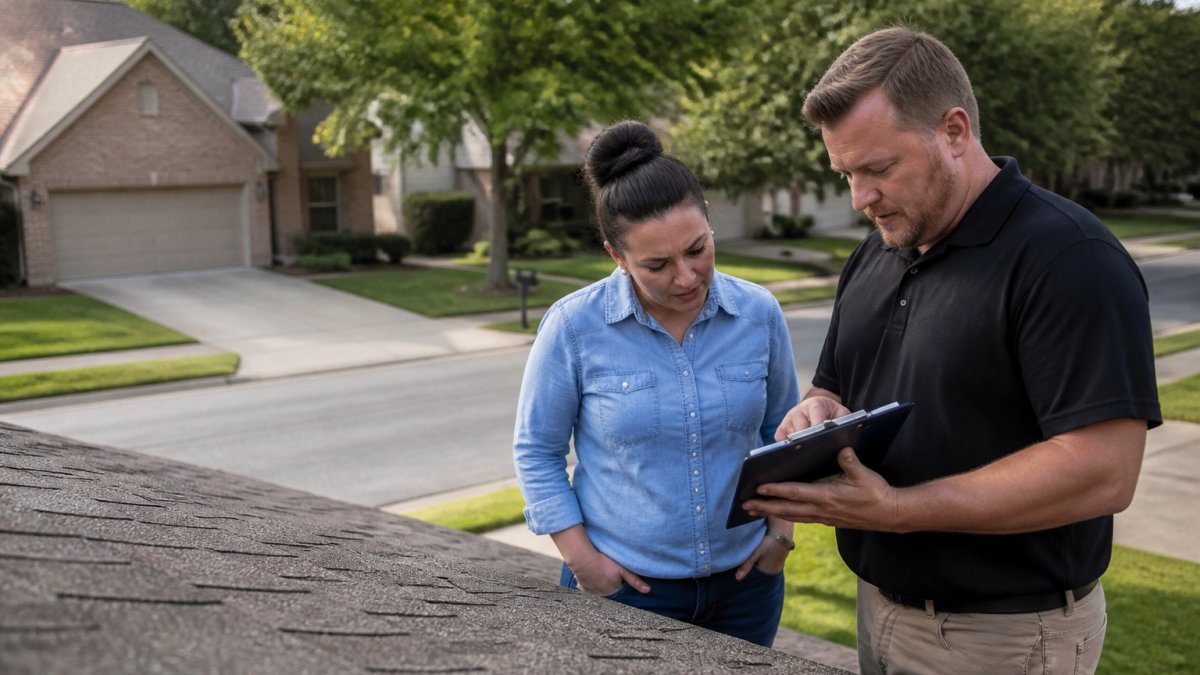
A thorough inspection identifies all damage and determines whether repair or replacement is needed, checking areas homeowners often miss.
Exterior inspection covers:
- Shingle condition and coverage
- Flashing integrity around penetrations
- Gutter and downspout condition
Interior inspection includes:
- Attic ventilation and airflow
- Signs of moisture or leaks
- Wood framing condition
Documentation provided:
- Detailed photos of damage areas
- Written assessment of findings
- Repair or replacement recommendation
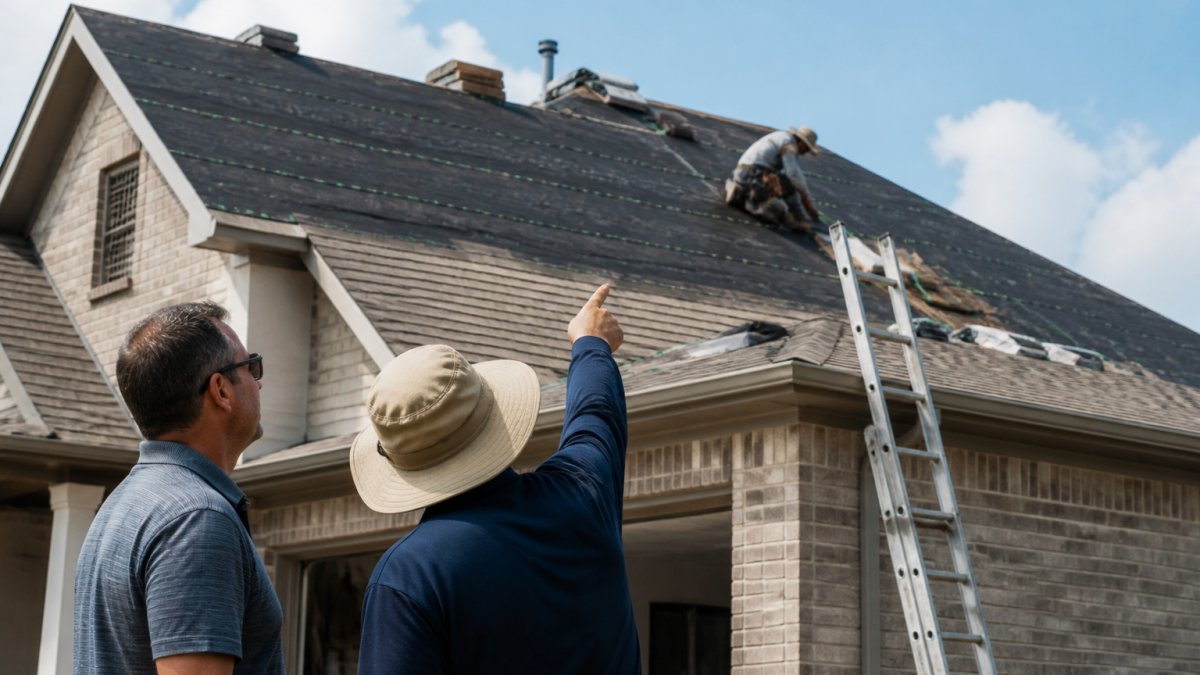
Professional inspections take 1-2 hours typically. Inspectors use binoculars and sometimes climb ladders to examine roof closely. They provide written reports explaining findings in detail.
How to Safely Inspect Your Roof From the Ground
You can perform a basic roof inspection without climbing. This ground-level assessment catches obvious problems and determines if professional inspection is needed.
What you can see from the ground:
Use binoculars from your yard to look for missing, cracked, or curling shingles.
Inspect your attic safely:
Enter your attic during daylight if possible.
Safety tips:
- Never climb on a wet or steep roof
- Use a sturdy ladder on level ground
- Have someone spot you if climbing
Ground-level inspection provides valuable information. If you spot damage signs, call a professional, roofers have the safety equipment and experience to identify hidden damage.
What to Do After Finding Roof Damage
Discovering roof damage creates urgency, but acting quickly prevents water damage from spreading.
Immediate actions:
First, photograph all visible damage, this helps with insurance claims and contractor estimates.
Contact professionals:
Contact your homeowner's insurance if damage is storm-related.
Plan your timeline:
If damage is minor and the roof is young, repair may suffice.
Budget for the work. Replacement is a significant investment.
Finding roof damage doesn't have to mean panic. Our team examines your roof thoroughly, explains what we find, and recommends the best path forward, whether that's targeted repairs or full replacement.
Frequently Asked Questions
What are the most common signs that a roof needs replacement?
The clearest indicators include missing or curling shingles, active roof leaks causing water stains on ceilings, granule loss visible in gutters, sagging sections, and mold or rot in the attic. If your roof is over 20 years old and showing multiple signs, replacement is often more cost-effective than repeated repairs. A professional inspection can confirm whether your specific roof needs replacement or targeted repairs.
Can I repair my roof instead of replacing it?
Repair works well for isolated damage, a few missing shingles, small leaks, or damaged flashing. However, if damage covers more than 25% of the roof, the roof is nearing the end of its lifespan, or you're making multiple repairs each year, replacement is usually the better investment. A professional can evaluate your roof's overall condition and recommend the most practical path forward.
How long does a typical roof last?
Asphalt shingle roofs typically last 15-20 years, though some high-quality shingles reach 25 years with proper maintenance. Metal roofs can last 40-70 years, and slate or tile roofs 50+ years. Local weather, ventilation, and maintenance all affect lifespan. If your roof is approaching or past these age ranges and showing wear, a professional inspection helps determine if replacement is needed soon.
Is it safe to inspect my roof myself?
You can safely inspect from the ground using binoculars to check for missing shingles, visible damage, or moss growth. Never climb onto the roof yourself, it's dangerous and risks falls and injury. For a thorough evaluation of structural integrity, leaks, underlayment condition, and interior damage, hire a professional. A professional inspection identifies problems you can't see from the ground and provides documentation for insurance or warranty claims.