 blog
Architectural Shingles vs Metal Roofing: Cost Breakdown
Table of Contents
- Architectural Shingles vs Metal Roofing: Upfront Cost Comparison
- Material Costs and Installation Expenses Explained
- Metal Roofing Lifespan vs Shingles: Which Lasts Longer
- Metal Roof Insurance Discounts and Long-Term Savings
- Best Roofing Materials for North Texas Climate
- Calculating Total Roof Replacement Cost by Size
- Making the Right Choice for Your Home
- Frequently Asked Questions
Last Updated: October 7, 2026
Architectural Shingles vs Metal Roofing: Upfront Cost Comparison
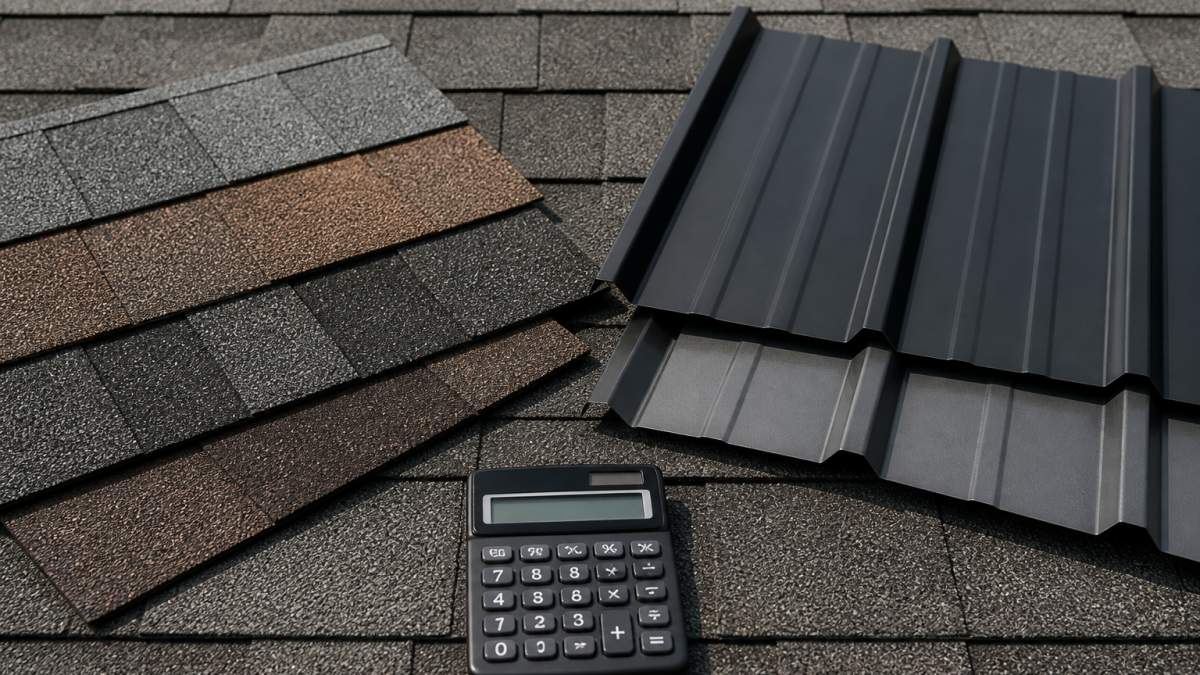
When homeowners face a roof replacement decision, the first question is always about money. Architectural shingles vs metal roofing cost represents one of the biggest variables in that calculation. The upfront price difference between these two materials is substantial, but it's only part of the story.
Here's the like-for-like framing most articles skip: compare architectural shingles to a comparable metal system, not to builder-grade three-tab shingles. Three-tab is a thinner, flatter product with a shorter lifespan, and pricing it against metal exaggerates the gap. Architectural shingles are the laminated, dimensional product most homeowners actually install, so that's the tier used throughout this comparison.
Typical installed cost ranges, based on common contractor estimates:
| Material | Installed cost per square (100 sq ft) | Typical lifespan |
|---|---|---|
| Architectural shingles | $400-$700 | 20-30 years |
| Standing seam metal | $900-$1,800 | 40-70 years |
| Exposed-fastener metal panels | $600-$1,100 | 25-40 years |
| Metal shingles/stamped panels | $800-$1,500 | 40-60 years |
Material-only costs run roughly $100-$200 per square for architectural shingles and $250-$600 per square for metal, depending on gauge, finish, and whether you choose steel, aluminum, or copper. Labor typically represents 40-60% of the total bill for either material.
Metal roofing carries a higher upfront price tag for three reasons: the raw material costs more, the panels are custom-formed to your roof's dimensions, and installation requires specialized crews and equipment. Architectural shingles are familiar to nearly every roofer, install faster, and generate less waste.
At Astro Roofing, we help homeowners understand the tradeoffs between different roofing options. Many assume the cheaper option upfront is the better financial choice. However, the long-term value often depends on factors like lifespan, maintenance, and how long you plan to stay in your home.
Material Costs and Installation Expenses Explained
The material cost per square foot differs significantly between architectural shingles and metal roofing. Architectural shingles run lower, you're paying for asphalt-based products that have been refined over decades. Metal roofing materials cost more because they involve steel, aluminum, or copper components that require specialized manufacturing.
Installation complexity affects labor costs too. Architectural shingles go on faster because roofers have installed them for years. The process is straightforward: nail down the shingles, overlap them properly, and seal the edges. Metal roofing requires different techniques. Standing seam systems, exposed fastener systems, and other metal roof configurations demand precision that takes longer and often costs more in labor.
The total installed cost per square foot reflects both material and labor. A square in roofing terminology equals 100 square feet. Your roof size, measured in squares, determines how material costs scale. A small 15-square roof will see different per-square pricing than a 25-square replacement because of how contractors estimate labor and material waste.
Regional factors matter too. Labor rates vary by location. Complexity of your specific roof, steep pitch, multiple valleys, existing tear-off requirements, pushes costs up. Weather conditions during installation can add days to a project, increasing labor expenses.
Metal Roofing Lifespan vs Shingles: Which Lasts Longer
This is where the architectural shingles vs metal roofing cost equation shifts. Architectural shingles typically last 20-25 years under normal conditions. Metal roofing commonly lasts 40-50 years or longer. Some metal roofs installed decades ago are still performing.
Durability affects replacement cycles. If you install architectural shingles today and plan to stay in your home 30 years, you'll replace them at least once. Metal roofing might outlast your ownership of the property. This lifespan difference is the primary reason many homeowners view metal as better long-term value.
Weather resistance varies too. Architectural shingles handle typical weather well, but hail damage, severe wind, and extreme temperature swings take their toll faster. Metal roofing resists hail impact better and won't curl or deteriorate from UV exposure the way shingles do over time. In climates with frequent storms, this durability advantage compounds.
Maintenance requirements differ. Architectural shingles need periodic inspection and occasional repairs, a curled shingle here, a nail popping up there. Metal roofing requires less maintenance, though you should inspect fasteners and seams periodically. The lower maintenance burden of metal extends its effective lifespan.
Metal Roof Insurance Discounts and Long-Term Savings
Many insurance companies offer discounts for metal roofing because of its superior durability and fire resistance. Architectural shingles don't typically qualify for these discounts, though some insurers offer small breaks for high-quality architectural shingles.
These insurance savings compound over the years. If you're paying for a metal roof partly through insurance savings, the financial gap narrows. Over a 30-year period, those discounts add up.
Resale value is another long-term consideration. Homes with metal roofs often appeal to buyers concerned about durability and maintenance. The remaining lifespan of your roof becomes a selling point. A 10-year-old metal roof with 30+ years of life remaining is an asset. A 10-year-old architectural shingle roof that needs replacement in 10-15 years is a liability buyers factor into their offer.
Energy efficiency plays a role too. Metal roofing reflects more sunlight than dark architectural shingles, potentially reducing cooling costs in warm months. The savings depend on your climate, roof color, and how much air conditioning you use. In areas with hot summers, this benefit is more meaningful.
Best Roofing Materials for North Texas Climate
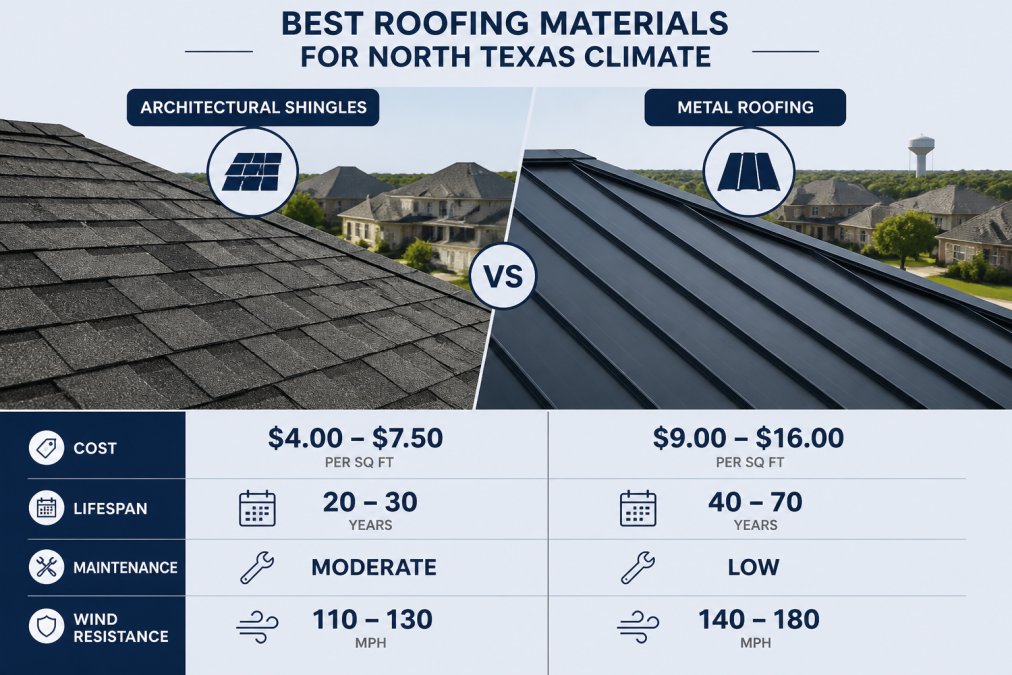
The local climate shapes which roofing material performs better over time. North Texas experiences hot summers, occasional severe storms, and hail events that test roofing durability. Architectural shingles handle typical weather, but the combination of intense sun exposure and periodic hail creates conditions where metal roofing's durability advantage becomes significant.
Metal roofing excels in hail-prone regions. Standing seam metal systems with proper underlayment resist hail impact that would damage or dent architectural shingles. If you've experienced hail damage before, metal roofing reduces that risk substantially.
Architectural shingles remain a solid choice for the area if you're budget-conscious and plan to replace your roof in 20-25 years anyway. They perform adequately in local conditions. The question becomes whether the lower upfront cost justifies accepting a shorter lifespan.
Summer heat in the region can accelerate shingle deterioration. UV exposure causes asphalt shingles to lose granules and become brittle faster in intense sun. Metal roofing's reflective properties help mitigate this. Over a 30-year period, this matters.
Calculating Total Roof Replacement Cost by Size
Your roof size is the primary driver of total project cost. A 1,500-square-foot home typically has a roof of 15-18 squares. A 2,500-square-foot home might have 25-30 squares depending on pitch and design complexity. One square equals 100 square feet of roof surface.
Here's how the totals shake out using the installed cost ranges from the previous section:
| Roof size | Architectural shingles (installed) | Standing seam metal (installed) |
|---|---|---|
| 15 squares | $6,000-$10,500 | $13,500-$27,000 |
| 20 squares | $8,000-$14,000 | $18,000-$36,000 |
| 25 squares | $10,000-$17,500 | $22,500-$45,000 |
| 30 squares | $12,000-$21,000 | $27,000-$54,000 |
These figures assume a single-layer tear-off, standard pitch, and sound decking. Each of those assumptions can change the total:
- Tear-off: Removing the old roof is often a separate line item, commonly $100-$200 per square. Two layers of old shingles can double that.
- Decking: Rotted or damaged sheathing is usually replaced at $75-$150 per sheet of plywood or OSB. A handful of soft spots is normal; widespread rot is not.
- Pitch: Roofs steeper than about 8/12 typically carry a pitch surcharge because crews work slower and need extra safety setup.
- Access and complexity: Multiple valleys, dormers, skylights, and chimneys add labor hours. So does a roof that's hard to reach with a dumpster or delivery truck.
- Underlayment and flashing: Metal roofing often requires a different underlayment and specialized flashing around penetrations, which adds material cost.
Labor costs scale with size but not linearly. A larger roof doesn't necessarily cost twice as much in labor as a smaller one, there are efficiencies in covering more area. However, steeper pitches, more valleys, and complex roof designs push labor costs up regardless of total square footage.
How to compare contractor estimates line by line
Making the Right Choice for Your Home
The architectural shingles vs metal roofing cost decision ultimately depends on three factors: your budget, your timeline, and your priorities.
If you're replacing a roof and plan to sell within 10-15 years, architectural shingles make financial sense. You'll recover the lower cost through a faster sale. The roof will likely outlast your ownership.
If you're staying long-term, 20+ years, metal roofing's durability and lower maintenance burden often justify the higher upfront cost. Insurance discounts, energy savings, and resale value add up over decades.
Budget constraints matter. If the upfront cost difference is prohibitive, architectural shingles are a legitimate choice. They perform adequately in the local climate and will protect your home effectively for 20-25 years.
Climate resilience is worth considering. If hail damage concerns you or severe weather is common in your area, metal roofing's durability advantage is tangible, not theoretical.
The best choice aligns your financial situation with your long-term plans. Neither option is universally "right", context determines which makes sense for your home.
When you're ready to move forward, get multiple quotes from experienced contractors who can explain the tradeoffs specific to your roof. They'll assess your roof's pitch, complexity, and local conditions to provide accurate estimates. A quality installation matters more than material choice, poor installation compromises any roofing system.
Choosing between architectural shingles and metal roofing involves more than comparing prices. The decision shapes your home's protection and your maintenance burden for decades. At Astro Roofing, we provide free inspections and detailed estimates that break down the real costs, material, labor, and long-term value, so you can make an informed choice. Our team has over 30 years of experience helping homeowners in the area understand their roofing options and find solutions that fit their needs and budget.
Frequently Asked Questions
Are architectural shingles more expensive than metal roofing upfront?
Architectural shingles typically cost less to install initially than metal roofing. Material cost per square foot for architectural shingles runs lower, and installation labor is often less complex. However, metal roofing's higher upfront cost is offset by its longer lifespan and lower maintenance needs over 30+ years. The true value depends on how long you plan to stay in your home and your budget for immediate expenses versus long-term savings.
How does the lifespan of architectural shingles compare to metal roofing?
Architectural shingles typically last 20-25 years with proper maintenance, while metal roofing can last 40-70 years depending on the system type and climate. This durability difference is a key factor in lifetime cost calculations. Metal roofs resist weather damage, hail, and UV degradation better than shingles, meaning fewer repairs and replacements over time. For homeowners planning to stay long-term, metal's extended lifespan often justifies its higher initial investment.
Do metal roofs qualify for insurance discounts?
Many insurance providers offer discounts for metal roofs because they resist fire, hail, and wind damage better than architectural shingles. Discount amounts vary by insurer and location. Contact your insurance agent to confirm eligibility and the specific discount available in your area. This savings should be factored into your total cost comparison when deciding between metal and shingle options.
What factors influence the total installation cost of a new roof?
Total roof replacement cost depends on roof size (measured in squares), material choice, labor rates in your area, roof pitch and complexity, existing roof condition, and local building codes. Tear-off costs, underlayment, and roof decking repairs add to the final bill. Regional factors like climate and local contractor availability also affect pricing. Get free estimates and inspections from experienced local contractors to understand the specific costs for your home and compare options accurately.