 blog
Emergency Roof Tarping Cost in 2026: What to Expect
Last Updated: October 30, 2026
Quick Summary
Emergency roof tarping usually costs a few hundred dollars for a small patch and considerably more for steep or large jobs, depending on the damaged area, roof pitch, and access. Labor, materials, access surcharges, and any after-hours fees make up the roof tarping cost, so a written quote is the most reliable figure. Tarping is a temporary fix that stops leaks until a permanent repair.
- Get the leak covered first, then plan the full repair.
- Ask for a written quote with labor, materials, and emergency fees listed separately.
- Photograph the damage before anyone touches the roof.
- Report the loss to your insurer early, since many policies require prompt notice.
- Do not sign a permanent-repair contract before the adjuster has seen the damage.
Table of Contents
- Emergency Roof Tarping Cost in 2026: An Overview
- Typical Price Ranges and Minimum Service Charges
- Factors That Change the Price: Roof Size, Pitch, and Access
- How Long Does a Roof Tarp Last and When Repairs Follow
- Does Homeowners Insurance Cover Roof Tarp Costs?
- DIY Tarping Versus a Professional: Safety and Cost Tradeoffs
- Roof Tarp Estimate Checklist: What a Quote Should Include
- Frequently Asked Questions
Contact Astro Roofing: Email Astroroof@yahoo.com | Phone 817-285-7663
Emergency Roof Tarping Cost in 2026: An Overview
When a storm rips shingles off your roof, the first question is usually how much emergency roof tarping will cost. Astro Roofing, a Hurst, Texas roofing and gutter company with more than 30 years of experience, helps homeowners with storm damage. Emergency roof tarping cost depends on the size of the damaged area, how steep the roof is, and whether the work has to happen after hours. Pricing depends on the specifics of each job, so the most reliable figure comes from a written quote.
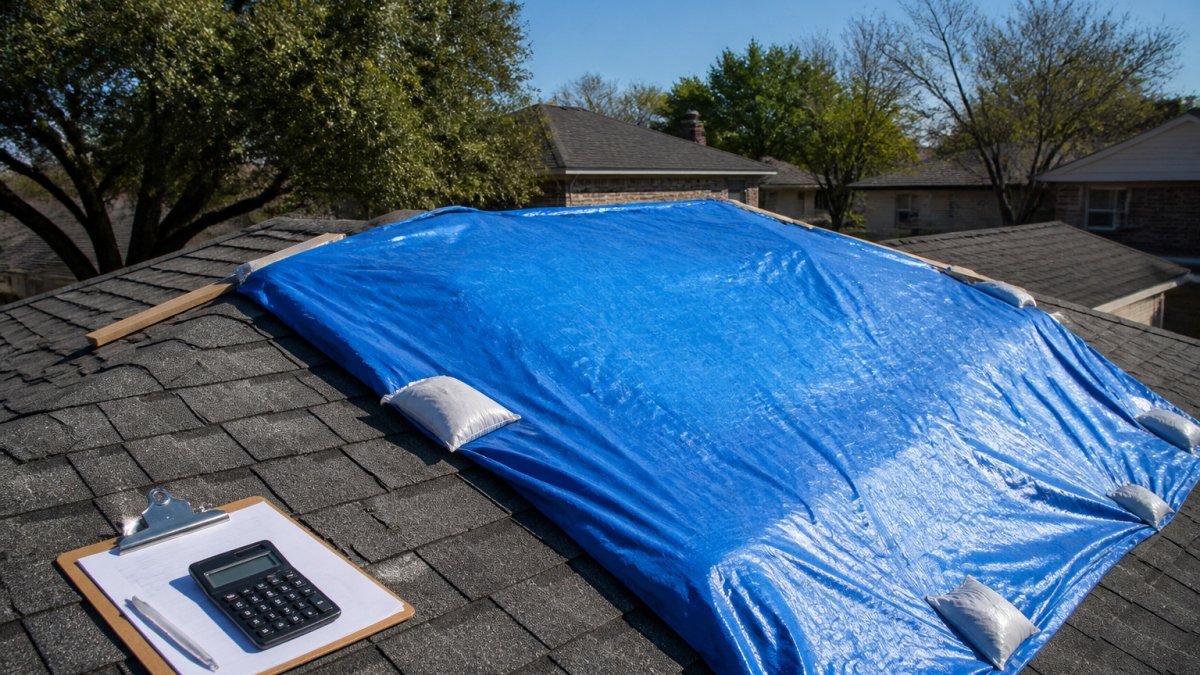
Tarping is a short-term fix. A roof tarp stops rain and wind from getting into your attic and walls while you wait for a permanent repair. Think of it as a bandage, not a cure.
Here is what we tell most homeowners:
- Get the leak covered first, then worry about the full repair
- Ask for a written quote that lists labor, materials, and any emergency fees
- Take photos of the damage before anyone touches the roof
- Call your insurance company early, since many policies require prompt reporting
Typical Price Ranges and Minimum Service Charges
Most tarping quotes are built from the same handful of line items, and knowing them is the fastest way to tell whether a quote is fair. Instead of publishing a single flat rate, we break every estimate into the parts below so you can compare offers line by line.
The line items behind every tarping quote
-
Labor: Usually billed by the hour or by the crew-day, and it rises with roof pitch, height, and how much safety rigging is needed.
-
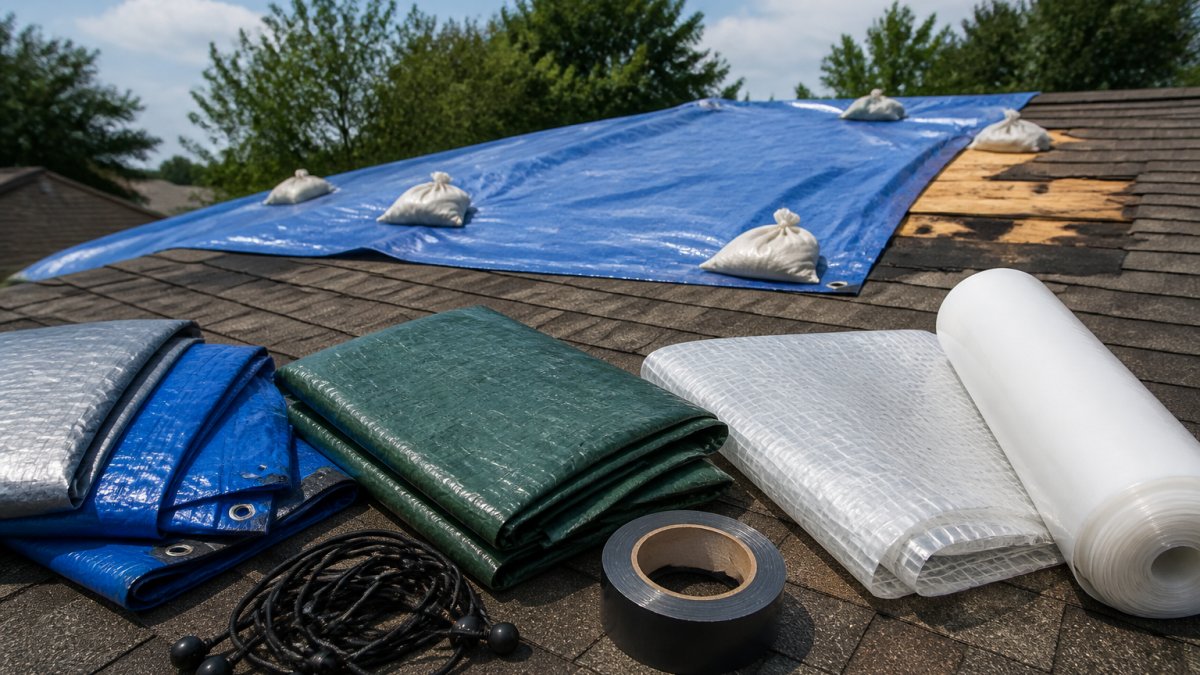
Materials: The tarp itself (often a heavy-duty polyethylene or reinforced woven product), fasteners, cap nails or batten strips, and seam tape. Material cost scales with the square footage covered.
-
Access surcharges: Tight lots, locked gates, steep driveways, tree cover, or a roof that needs ladder work from an awkward side can add time and cost.
-
Disposal and cleanup: Removing old damaged material or debris is sometimes a separate line.
How companies quote, and why it matters
Some contractors quote by the square foot of tarp, others quote a flat fee for the whole visit, and some combine a minimum plus a per-square rate. Two quotes that look similar can cover very different scopes. Always ask which method the contractor uses, what the minimum covers, and whether the emergency fee is included or added at the end.
What moves you up or down the range
A small, low-slope patch on an accessible single-story roof sits at the low end of any company's range. A steep, two-story roof with valleys, tree cover, and an after-hours call sits at the high end. The same company can land anywhere between those two points depending on the job, which is why a phone estimate based on an honest description of your roof beats a generic online number.
For current pricing on your specific roof, contact Astro Roofing directly for a free estimate. You can also see our roof replacement services for larger repairs that follow a tarp.
The article breaks tarping quotes into a few line items, so here is a quick reference for what each one covers and what changes it.
| Line item | What it covers | What moves the cost |
|---|---|---|
| Labor | Crew time to install the tarp | Roof pitch, height, safety rigging |
| Materials | Tarp, fasteners, cap nails or batten strips, seam tape | Square footage covered |
| Access surcharge | Extra time for difficult sites | Tight lots, locked gates, steep driveways, tree cover |
| Disposal and cleanup | Removing old damaged material or debris | Amount of debris; sometimes billed separately |
| Emergency fee | After-hours or urgent call-out | Nights, weekends, storm surges |
Factors That Change the Price: Roof Size, Pitch, and Access
Several factors shape the final bill. The biggest are:
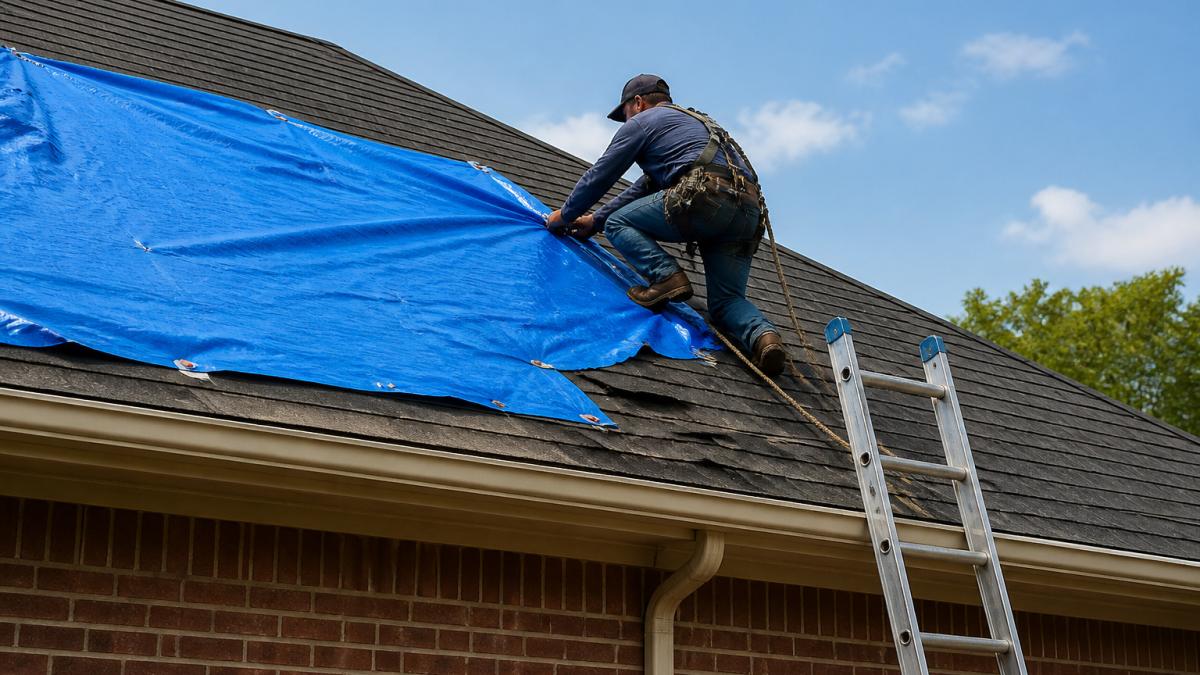
- Damaged area size: A small leak costs less to cover than a section torn across half the roof
- Roof pitch: Steep roofs need more safety gear and more time, which raises labor costs
- Roof height and complexity: Multi-story homes and roofs with many valleys take longer to tarp
- Access: Tight yards, fences, and tree cover can slow the crew down
- Timing: Nights, weekends, and storm surges often come with higher emergency fees
When you call, describe the roof and the damage honestly so the estimate reflects the real work.
How Long Does a Roof Tarp Last and When Repairs Follow
A properly installed tarp is meant to last weeks, not years. Weather exposure, wind, and the tarp material all affect how long it holds up. Most homeowners should plan on a permanent repair soon after the tarp goes on, because a tarp left too long can trap moisture and cause more damage.
Here is a simple timeline to plan around:
- Day one: Tarp installed and leak stopped
- Within days: Insurance inspection and damage documentation
- Within weeks: Permanent repair or replacement scheduled
If you are waiting on an insurer, keep the tarp in place and check it after every storm. A loose corner can let water in fast. For the repair that follows, see our roof repair services.
Does Homeowners Insurance Cover Roof Tarp Costs?
Many homeowners policies treat emergency tarping as a reasonable expense to protect the home from further damage after a covered event, such as a windstorm or hail. Whether your specific policy pays depends on your coverage, your deductible, and the cause of the damage, so the practical work is documenting the job properly and following your insurer's process in order.
A step-by-step claims and reimbursement process
- Report the loss promptly. Most policies require prompt notice. Call your insurer or start the claim in their app as soon as the damage is discovered, before or right after the tarp goes on.
- Photograph everything first. Take wide shots of the roof and damage, close-ups of the torn or missing shingles, and photos of any interior water staining. Date-stamp them if your phone allows.
- Keep the tarp receipt and the itemized invoice. Insurers typically want the invoice to show labor, materials, and any emergency fee separately. A lump-sum receipt is harder to reimburse.
- Ask your adjuster how temporary repairs are handled. Some policies reimburse emergency mitigation as part of the claim; others apply it to your deductible. Get the answer before the work starts if you can.
- Save the tarp itself as evidence. Do not discard the tarp or fasteners until the claim is settled, the adjuster may want to see the installation.
- Submit the invoice with your claim. Include the photos, the itemized invoice, and a short written description of what was damaged and when.
- Track the reimbursement separately from the repair estimate. The tarp invoice and the permanent-repair estimate are usually handled as separate line items in the same claim.
What to check in your policy
Look for the sections on duties after a loss, emergency or temporary repairs, and exclusions. Wear-and-tear, poor maintenance, and pre-existing leaks are commonly excluded, while sudden storm damage is commonly covered. If your policy language is unclear, ask your adjuster to point to the specific clause.
For official guidance on your rights as a policyholder, the [Texas Department of Insurance consumer resources | tdi.texas.gov] explain claim steps and how to file a complaint if needed.
DIY Tarping Versus a Professional: Safety and Cost Tradeoffs
Some homeowners try to tarp the roof themselves to save money. This can work for a small, low-slope area in good weather. However, climbing a wet or steep roof is one of the most dangerous jobs a homeowner can attempt. Falls cause serious injuries every year.
A professional crew brings fall protection, the right fasteners, and experience reading how water will move across your roof. A DIY tarp that slides off or leaks can cause more damage than it prevents. Weigh the small savings against the real risk. If you do attempt a DIY tarp, check a roof damage inspection guide first so you know what you are looking at.
Watch out: a tarp nailed through shingles can create new leak points. Use the method a professional would, or call for help.
Roof Tarp Estimate Checklist: What a Quote Should Include
Before you sign anything, make sure the quote covers these items:
- Itemized labor and materials
- Minimum service charge and any after-hours fees
- Tarp size and the area it covers
- Safety and fall protection included
- Clear plan for the permanent repair
- Written warranty or guarantee on the tarp work
- Proof of insurance and licensing
Compare at least two written quotes against this list. When you are ready, contact us for a free estimate. Astro Roofing is fully insured, and our team will walk you through the scope in writing before any work begins. Call 817-285-7663 or email Astroroof@yahoo.com today.
Frequently Asked Questions
How much does emergency roof tarping cost in 2026?
Emergency roof tarping pricing depends on the size of the damaged area, roof pitch, access, and whether the visit is after hours. Costs can vary widely from one job to the next, so the most reliable figure comes from a written quote. Astro Roofing offers free estimates and inspections, and you can call 817-285-7663 or email Astroroof@yahoo.com to request current pricing for your roof. Ask the contractor to itemize labor, materials, and any emergency or after-hours fees so you can compare quotes accurately.
Does homeowners insurance cover emergency roof tarping?
Many homeowners policies cover reasonable emergency measures taken to prevent further damage after a covered loss, which can include temporary tarping. Coverage depends on your policy and the cause of the damage, so check with your insurer before work begins. Keep photos, a written estimate, and the contractor's invoice, and document the damage thoroughly. Astro Roofing is fully insured and can provide the documentation your claim may require.
How long can a roof tarp stay in place?
A temporary roof tarp is meant to protect the roof only until permanent repairs can be made. Its lifespan depends on the tarp material, wind exposure, and how it is secured, and tarps left in place for long periods can deteriorate and lose effectiveness. Plan permanent repairs promptly after the emergency is stabilized. Astro Roofing can assess the damage and schedule permanent repairs once the roof is secure.
Can I tarp a damaged roof myself?
Some homeowners attempt a temporary tarp themselves, but working on a steep or wet roof carries serious fall risk. Professional crews have fall-protection equipment and experience securing tarps so they hold in wind and rain. If you do work on the roof yourself, avoid climbing during storms or on wet surfaces and consider calling a professional for safety. Astro Roofing can handle emergency tarping for your home.