 ultimate-guide
Residential Roof Replacement: Cost, Process & Timeline
Table of Contents
- Residential Roof Replacement Cost: What Drives the Price
- Signs You Need a New Roof vs. a Repair
- How Long Does a Roof Replacement Take?
- Roofing Contractor Vetting Checklist for Homeowners
- Comparing Roofing Materials: Shingle, Metal, and Tile
- Financing and Insurance Claims for Residential Roof Replacement
- Frequently Asked Questions
Last Updated: October 1, 2026
Residential Roof Replacement Cost: What Drives the Price
The cost of a residential roof replacement is not a single number, it is the sum of four moving parts: the size of the roof (measured in "squares," where one square equals 100 square feet of roof surface), the material you choose, the pitch and complexity of the roof, and the condition of the deck underneath. Two homes on the same street with identical square footage can land thousands of dollars apart because of the last two factors alone.

The Four Cost Levers, Explained
1. Roof size (squares). Contractors price by the square, not by the footprint of the house. A 2,000-square-foot home with a simple gable roof might have 22 squares of roof surface; the same home with a complex hip-and-valley layout can hit 30 squares. More squares means more material, more labor hours, and more waste.
What Actually Shows Up on the Line-Item Estimate
A written estimate should break the job into these buckets, not just hand you one lump sum:
- Tear-off and disposal, removing the old layers and paying landfill or recycling fees. Two layers of old shingles cost more to remove than one.
- Decking repair, priced per sheet of sheathing replaced, not as a flat fee.
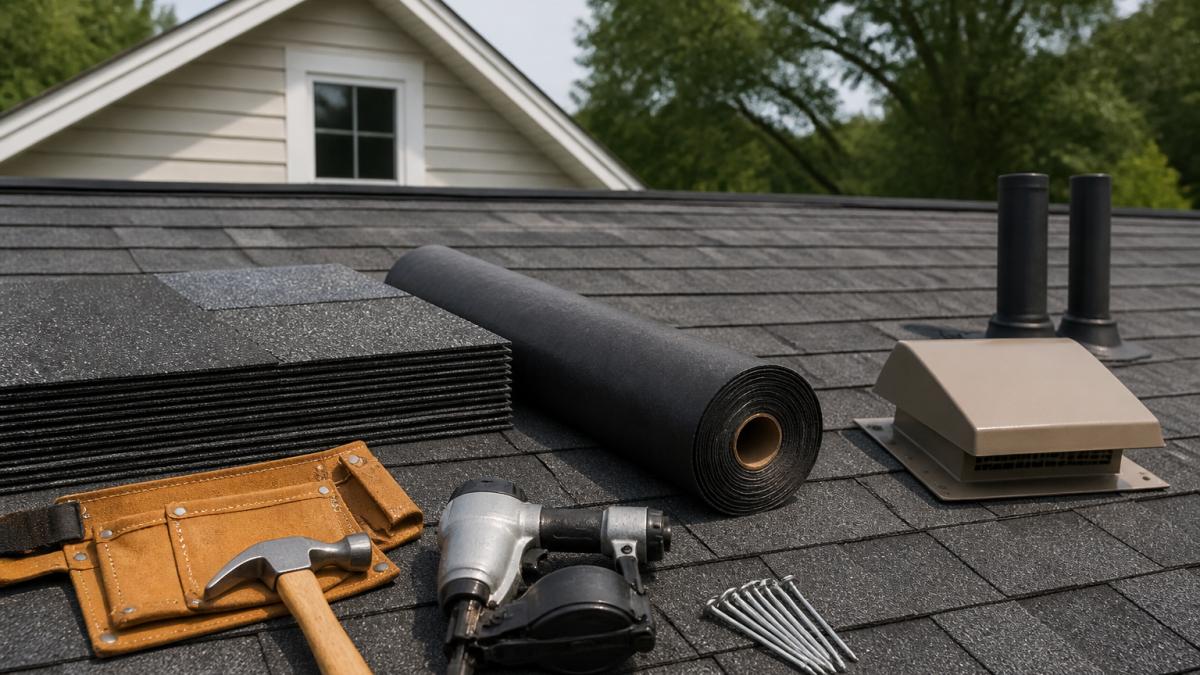
- Underlayment, synthetic felt or a peel-and-stick membrane. Ice-and-water shield is typically required at eaves and valleys in cold-winter regions.
- Flashing and drip edge, new metal at chimneys, walls, and rakes. Reusing old flashing is a false economy.
- Ventilation, ridge vents, soffit vents, or a balanced intake/exhaust system. Poor ventilation shortens shingle life from the inside.
- Labor, the largest single line on most jobs, and the one that moves most with pitch and complexity.
- Permits, pulled by the contractor, not the homeowner, on a legitimate job.
How to Use a Roof Replacement Cost Estimator
A roof replacement cost estimator gives a ballpark, not a bid. Enter your square footage, roof pitch, material type, and number of layers to remove. Treat the result as a starting point, then get a written roofing estimate that accounts for decking condition, ventilation, and permits.
Where the Money Comes From: Insurance and Financing
This is the part most cost guides skip. If the damage is storm-related, hail bruising, wind-lifted shingles, impact from falling limbs, your homeowner's policy may cover replacement minus your deductible. The mechanics matter: you file a claim, an adjuster inspects and issues a scope of loss, and the contractor's estimate is reconciled against that scope. Wear-and-tear failures (age, granule loss, curling) are almost never covered.
Signs You Need a New Roof vs. a Repair
Age and spread decide it. A roof past its expected lifespan with widespread granule loss usually needs replacement, while an isolated problem on a younger roof can be repaired.
Watch for these signs you need a new roof:
- Shingles curling, cracking, or missing in clusters
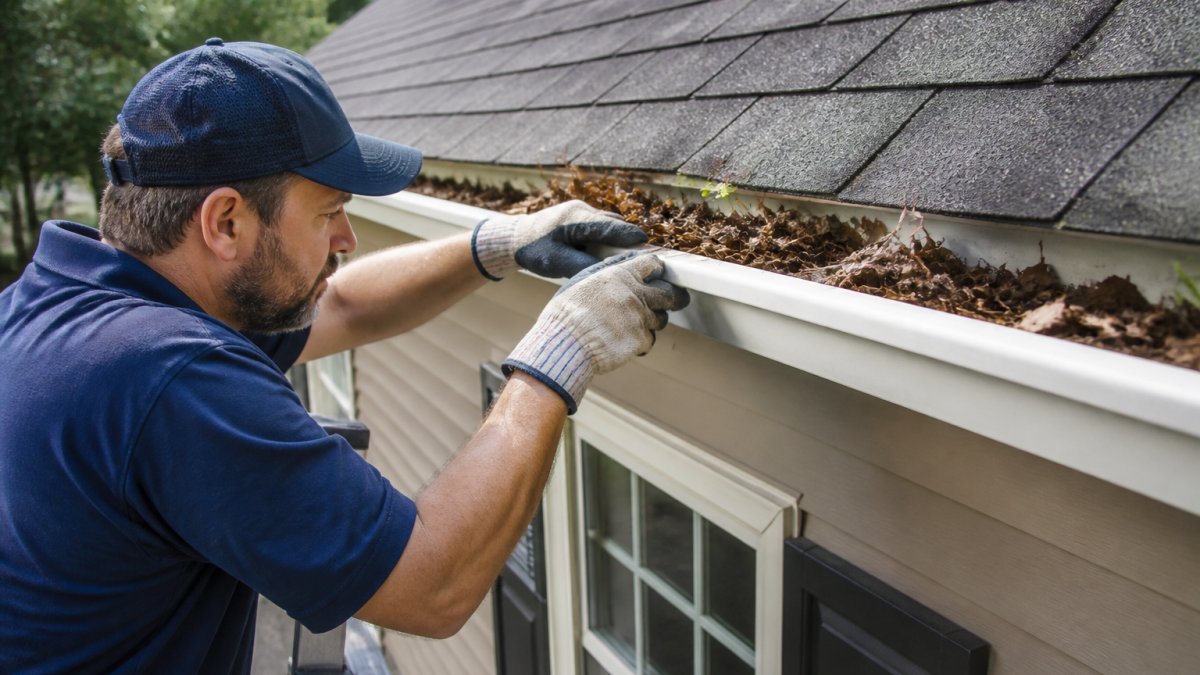
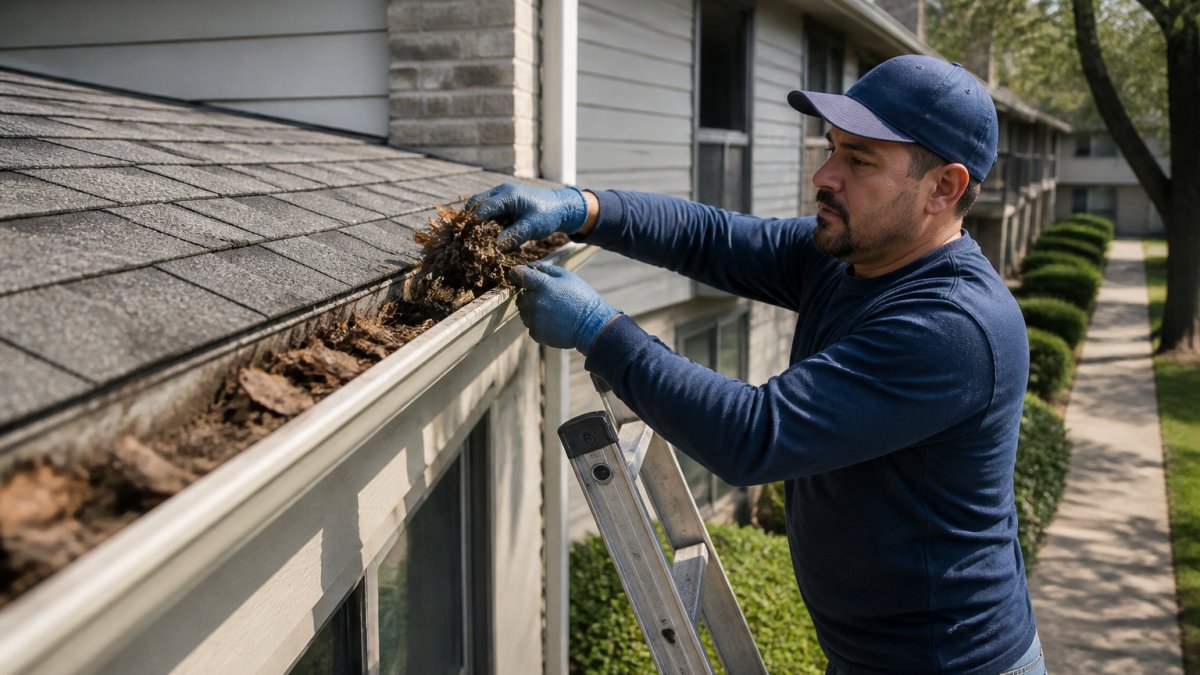
- Granules collecting in gutters
- Daylight or water stains in the attic
- Sagging roof decking
- Multiple leaks across different areas
Storm Damage and Emergency Repair Indicators
Storm damage often shows up as bruised or lifted shingles that fail months later. After a major hail or wind event, request a professional roof inspection before assuming the damage is cosmetic. Emergency repair is the right call for active leaks, missing flashing, or exposed decking.
How Long Does a Roof Replacement Take?
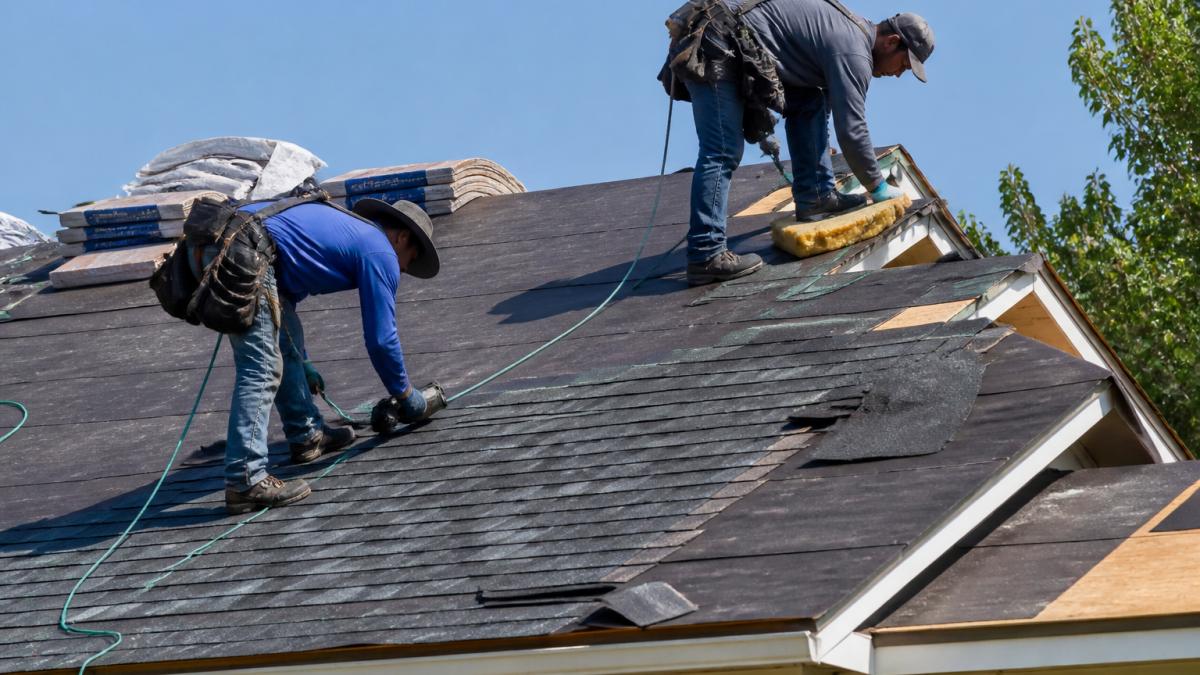
A typical residential roof replacement takes one to three days for an average single-family home. Larger homes, steep roof pitch, or tile installations stretch the roof replacement timeline to a week or more.
| Project Factor | Typical Timeline |
|---|---|
| Standard asphalt, single story | 1-2 days |
| Two-story, moderate pitch | 2-3 days |
| Tile or steep pitch | 4-7 days |
| Storm damage with decking repair | Add 1-3 days |
Roofing Contractor Vetting Checklist for Homeowners
A good roofing contractor shows proof before you sign anything. The checklist below is the floor, not the ceiling, but the real skill is knowing what each item actually protects you from, and which red flags should end the conversation.
The Documentation Checklist
- State or local license, verify it directly with the issuing authority, not just on the contractor's letterhead. License numbers are searchable in most states.
- Certificate of insurance, you want to see both general liability and workers' compensation. Call the insurer to confirm the policy is active; a lapsed certificate is a common problem.
- Written, itemized estimate, material brand and grade, underlayment type, flashing scope, ventilation plan, and labor. A one-line quote is not an estimate.
- Warranty terms in writing, manufacturer warranty and workmanship warranty are two different documents. Know who honors each and for how long.
- Local references, ask for addresses or photos of completed jobs in the last 12 months, ideally on homes similar to yours.
- A named point of contact, the person who will answer the phone during the job, not just the salesperson who closed it.
What Each Item Actually Protects You From
License and insurance. If an uninsured crew member is injured on your property, the claim can land on your homeowner's policy. Workers' compensation coverage is what stands between you and that exposure. General liability covers damage to your home, a dropped bundle through a skylight, a ladder through a garage door.
Red Flags That Should End the Conversation
- A demand for full payment or a large cash deposit up front. A reasonable deposit covers materials; it does not cover the whole job.
- A door-to-door pitch immediately after a storm, with pressure to sign that day.
- An offer to "waive your deductible" or "handle everything" with your insurer. In most states, waiving a deductible is illegal, and it can void your coverage.
- No physical business address, no license number on the truck or paperwork, and a phone number that only goes to voicemail.
- A quote that is dramatically lower than every other bid with no explanation of what was left out.
Payment Schedule and Lien Protection
A standard, defensible payment schedule ties money to milestones: a modest deposit at signing, a progress payment when materials are delivered or tear-off is complete, and the balance only after a final walkthrough and your written sign-off. Hold back the final payment until you have the manufacturer warranty documents in hand.
Comparing Roofing Materials: Shingle, Metal, and Tile
Shingle replacement remains the most common choice because it balances cost and performance. Metal and tile cost more upfront but can outlast asphalt by decades.
| Material | Relative Cost | Lifespan | Best For |
|---|---|---|---|
| Asphalt shingle | Lowest | Moderate | Budget-conscious homes |
| Metal | Higher | Long | Long-term durability |
| Tile | Highest | Longest | Hot climates, heavy loads |
Financing and Insurance Claims for Residential Roof Replacement
Financing and insurance claims are where most homeowners feel stuck. Many providers offer payment plans, and storm-related damage is often covered, but the process rewards preparation.
Frequently Asked Questions
What is the average cost to replace my roof?
The cost of a residential roof replacement depends on several factors including square footage, roof pitch, material choice, and labor rates in your area. Because these variables change significantly from project to project, a precise estimate requires an on-site inspection. Astro Roofing offers free estimates to provide an accurate quote based on your home's specific dimensions and material needs.
How do I know if my roof needs to be replaced or repaired?
Look for signs like missing shingles, granules in gutters, or daylight showing through the attic. If your roof is over 30 years old or has widespread damage, replacement is often more cost-effective than repeated repairs. A professional roof inspection can confirm whether flashing or underlayment failure requires a full replacement or just a localized fix.
Does homeowners insurance cover residential roof replacement?
Insurance typically covers sudden damage from storms, hail, or fallen trees, but not general wear and tear or lack of maintenance. If you have storm damage, document it immediately and contact your provider. A reputable roofing contractor can help assess the damage and provide documentation for your claim, ensuring you get the coverage you are entitled to.
What should I look for when hiring a residential roofing contractor?
Verify the contractor is fully insured and carries workers' compensation. Check for a physical local address and a valid state license. Ask for references from recent jobs and confirm they provide a written warranty covering both materials and labor. A thorough roofing contractor vetting checklist helps you avoid scams and ensures the crew follows building codes.
How long does a typical residential roof replacement take?
Most residential roof replacements take one to three days, depending on the size and complexity of the roof. Factors like steep roof pitch, multiple layers of old material, or bad weather can extend the timeline. A professional crew will typically tear off the old roof, inspect the decking, and install the new system within this window.
A residential roof replacement is a significant decision, and getting the process right protects your home for decades. Astro Roofing brings over 30 years of experience, free estimates and inspections, and fully insured crews to every project. From custom-fit gutter systems to skylight repairs and water damage prevention, the team handles the details that keep your property dry and your curb appeal strong. Call Astro Roofing today for a free inspection and a clear, honest estimate.