 ultimate-guide
Gutter Maintenance for Rental Properties: A Complete Guide
Table of Contents
- Understanding Gutter Maintenance for Rental Properties
- Rental Property Gutter Cleaning Responsibility: Landlord vs. Tenant
- How Often to Clean Gutters on a Rental Property
- Gutter Inspection Checklist for Landlords
- Landlord Gutter Maintenance Checklist: Step-by-Step
- Risks of Neglected Gutter Maintenance
- Professional Gutter Maintenance vs. DIY
- Conclusion
- Frequently Asked Questions
Last Updated: October 17, 2026
Contact Astro Roofing: Email: Astroroof@yahoo.com | Phone: 817-285-7663
Understanding Gutter Maintenance for Rental Properties
Gutter maintenance for rental properties is one of the most overlooked responsibilities in property management, yet it directly impacts liability, tenant satisfaction, and building integrity.
Gutters are your property's first line of defense against water intrusion. When they fail, water pools against the foundation, seeps into walls, and creates mold conditions, leading to tenant complaints, emergency repairs, and legal exposure.
Rental Property Gutter Cleaning Responsibility: Landlord vs. Tenant
Responsibility depends entirely on what your lease agreement states. There is no universal rule across all states; responsibility is negotiated at lease signing.
What Your Lease Agreement Should Say
Your lease should explicitly address exterior maintenance, including gutters and downspouts. Instead of vague language like "tenant maintains property," specify: "Tenant keeps gutters clear of leaves and debris.
Clear lease terms prevent misunderstandings. Many landlords assume tenants will maintain gutters without written instruction, only to discover months later that debris has accumulated and water damage has begun.
Consider these lease clause patterns:
- Landlord responsible: "Landlord maintains all structural elements, including gutters, downspouts, and roof drainage systems. Professional cleaning occurs twice yearly, typically in spring and fall."
- Tenant responsible for routine: "Tenant removes visible debris from gutters monthly during fall and spring. Landlord performs professional inspection and cleaning annually."
- Shared responsibility: "Tenant notifies landlord of gutter issues or blockages. Landlord arranges and pays for professional maintenance."
The strongest leases specify frequency, who performs the work, and what "maintenance" means. Without these details, disputes arise when water damage occurs.
Local Laws and Landlord Obligations
Most states impose a general "duty to maintain" on landlords, requiring rental properties remain habitable and safe, including functional water drainage.
Check your state's landlord-tenant laws. Many require landlords to maintain structural integrity, including roof and gutter systems.
The safest approach: assume landlord responsibility for structural maintenance (gutter repairs, replacement, professional cleaning) and tenant responsibility for routine debris removal. This aligns with most state interpretations of habitability and reduces legal exposure.
How Often to Clean Gutters on a Rental Property
Cleaning frequency depends on local environment, tree density, and seasonal weather. A property surrounded by deciduous trees needs more frequent attention than one in an open area.
Seasonal Cleaning Schedule
Most rental properties benefit from twice-yearly professional cleaning: late spring (May-June) and early fall (September-October), addressing spring pollen, summer growth, and fall leaves.
In regions with heavy tree coverage, add a third cleaning in early winter (November) before heavy rains.
Between professional cleanings, tenants or property managers should perform visual inspections and remove large debris. A quick walk around after storms catches problems early.
Additional Cleaning Triggers
Certain events warrant immediate inspection and cleaning:
- Heavy storms with wind gusts exceeding 30 mph often lodge branches in gutters
- Nearby tree trimming or removal sends branches into drainage systems
- Visible sagging gutters or water overflow during rain indicates blockage
Don't wait for scheduled cleaning if you notice these issues. Water damage accelerates quickly once gutters fail.
Gutter Inspection Checklist for Landlords
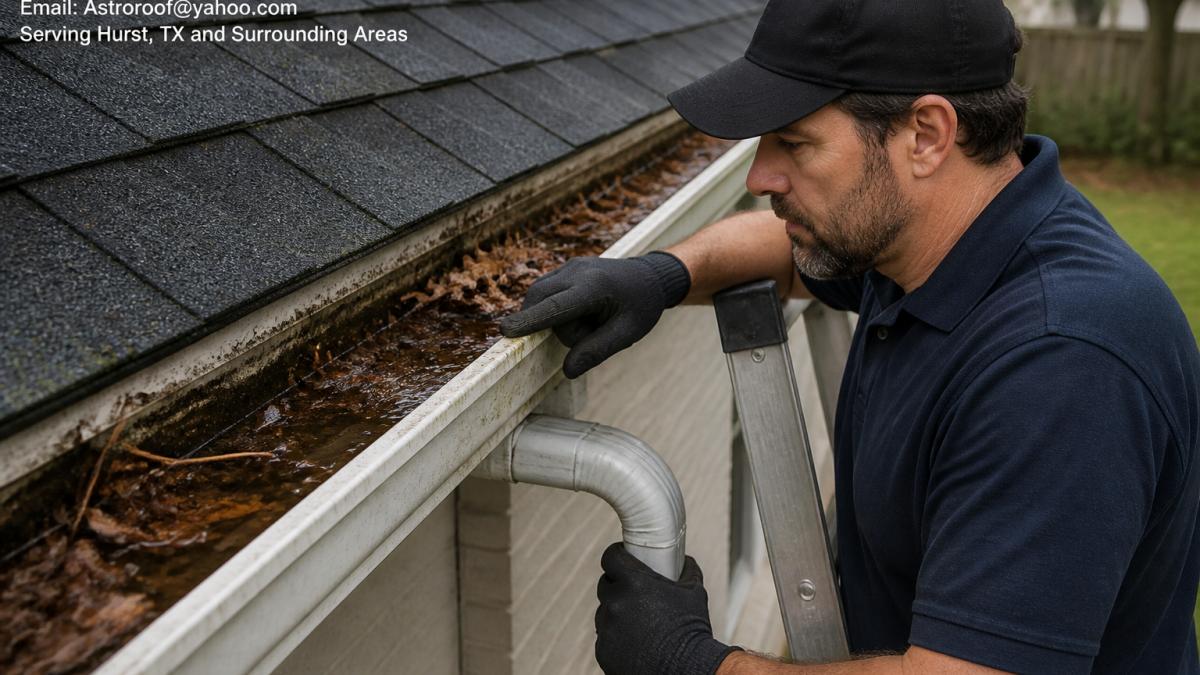
Regular inspections catch problems early. You don't need to climb a ladder yourself; a ground-level visual inspection or professional walkthrough reveals most issues.
What to Look For During Inspections
During a gutter inspection, look for these conditions:
- Debris accumulation: Leaves, twigs, pollen, and sediment blocking water flow
- Sagging sections: Gutters pulling away from the fascia indicate weight from standing water or debris
- Rust or corrosion: Orange streaks, holes, or flaking paint suggest metal degradation
Inspect after rain when you can see how water flows. If water overflows the edge during moderate rain, the gutter is blocked or sloped incorrectly.
Documentation and Record-Keeping
Maintain a maintenance log for each rental property, documenting inspection dates, conditions observed, cleaning or repairs performed, contractor details, and photos of any damage.
This documentation protects you legally. If water damage occurs and a tenant claims you failed to maintain the gutters, your records demonstrate due diligence, and insurers appreciate documented preventive maintenance when processing claims.
| Inspection Element | Frequency | Action if Found |
|---|---|---|
| Debris accumulation | After storms, seasonally | Schedule cleaning |
| Sagging sections | Annually | Call for professional repair |
| Rust or corrosion | Annually | Plan replacement or repair |
| Separated seams | Annually | Professional resealing or replacement |
| Downspout blockage | After storms, seasonally | Clear or replace downspout |
| Standing water | During rain observation | Adjust slope or clear blockage |
| Loose hangers | Annually | Tighten or replace fasteners |
Landlord Gutter Maintenance Checklist: Step-by-Step
A systematic approach prevents costly surprises. Use this checklist for your rental properties.
Pre-Season Preparation
Before heavy rain season arrives, complete these steps:
- Schedule professional inspection. Hire a licensed contractor to evaluate the entire gutter system, including roof edges, downspouts, and drainage paths.
- Arrange cleaning. Schedule professional gutter cleaning at least two weeks before your region's peak rain season.
- Review lease terms. Confirm your lease clearly states who is responsible for routine maintenance and professional repairs.
- Communicate with tenants. Provide written notice of upcoming maintenance, including instructions for tenant-performed debris removal if assigned.
- Photograph conditions. Take photos before the season begins to create a baseline for comparison if damage occurs.
- Check downspout extensions. Ensure downspouts extend at least 4-6 feet from the foundation.
- Inspect for previous repairs. Look for patches, re-roofing, or previous water damage that might indicate ongoing issues.
Post-Storm Assessment
After severe weather, perform a quick assessment:
- Check for visible debris. Look for branches, shingles, or other materials lodged in gutters.
- Observe water flow. During or after rain, watch how water moves through downspouts. Overflow indicates blockage.
- Document damage. Photograph any visible damage, separated sections, or debris accumulation.
- Contact tenants. Ask if they noticed interior leaks, water stains, or moisture issues.
- Schedule emergency cleaning if needed. If gutters are clearly blocked or overflowing, call for immediate service.
- File insurance documentation. Photograph and document all storm damage for potential claims.
Risks of Neglected Gutter Maintenance
Understanding the consequences of neglect motivates consistent maintenance.
Water Damage and Foundation Issues
Clogged gutters cause water to overflow and pool against the foundation, seeping into the basement or crawl space and leading to:
- Foundation cracks and settling
- Basement flooding during heavy rain
- Mold growth in walls and crawl spaces
Once water infiltrates the foundation, remediation is expensive. Foundation repair, mold remediation, and structural restoration can easily exceed $10,000 for a single-family rental property, and these costs typically fall on the landlord. Interior water damage also affects habitability: mold creates health hazards, and water-damaged walls or ceilings make the property uninhabitable, leaving you liable for rent abatement, temporary housing, and potential health-related claims.
Liability and Insurance Implications
Insurance companies view neglected maintenance as negligence. If water damage occurs and your policy investigation reveals clogged gutters or known issues you failed to address, your claim may be denied. If a tenant or visitor is injured by a gutter-related hazard, falling water, ice dams, or structural failure, you face personal liability.
Landlords have a legal duty to maintain habitable conditions. Neglected gutters violate that duty, exposing you to:
- Tenant lawsuits for water damage and mold remediation
- Code enforcement violations and fines
- Insurance claim denials
Preventive maintenance costs a fraction of the potential liability.
Professional Gutter Maintenance vs. DIY
Deciding whether to hire professionals or DIY depends on safety, expertise, and liability.
When to Hire a Licensed Contractor
Hire a professional for these tasks:
- Structural repairs. Any repair involving fascia boards, gutter hangers, roof edges, or downspout installation requires professional expertise. Improper installation creates water intrusion and liability.
- Gutter replacement. New gutters demand proper tools, knowledge of local building codes, and experience with various materials and styles.
- Roof-related work. If maintenance requires roof access or repairs, hire a licensed roofing contractor. Roof work carries significant safety and liability risks.
At Astro Roofing, we recommend landlords hire professionals for all structural work and major maintenance.
Safety Considerations and Ladder Work
If you or a tenant perform routine debris removal, safety is paramount. Ladder work on gutters creates serious injury risks:
- Falls from heights are the leading cause of serious home injuries
- Wet leaves and debris make gutters slippery
- Gutters are not designed to support a person's full weight
- Electrical hazards exist near power lines
If debris removal is assigned to tenants, include written safety instructions: use a sturdy ladder, wear non-slip shoes, never reach beyond arm's length, and never work during or immediately after rain. For landlords managing multiple properties, professional maintenance eliminates the safety liability of tenant or employee ladder work.
Conclusion
Gutter maintenance for rental properties is a non-negotiable landlord responsibility. Clear lease terms, seasonal inspections, and professional maintenance protect your investment, reduce liability, and keep tenants satisfied. Water damage from neglected gutters costs thousands to repair and exposes you to legal claims that far exceed the cost of preventive care.
If you're managing rental properties in the area and need professional gutter inspection, cleaning, or repair, Astro Roofing provides comprehensive gutter maintenance backed by over 30 years of experience.
Frequently Asked Questions
Who is responsible for cleaning gutters at a rental property?
Responsibility depends on the lease agreement and local laws. Most jurisdictions require landlords to maintain functional gutters as part of their obligation to keep the property in habitable condition. However, the lease can assign routine cleaning to tenants if clearly stated. Landlords remain liable for major repairs and damage caused by negligence. Review your lease and local property maintenance codes to clarify roles.
How often should gutters be cleaned on a rental property?
Most properties need gutter cleaning twice annually: once in late fall after leaves drop, and once in spring before heavy rains. Properties with many trees nearby may need cleaning three to four times yearly. After severe storms, inspect gutters immediately for debris and blockages. Establishing a seasonal maintenance schedule prevents overflow, water damage, and costly repairs to the roof and foundation.
What should a landlord gutter maintenance checklist include?
A comprehensive checklist should cover: removing leaves and debris, checking for standing water or blockages, inspecting downspouts for clogs, looking for rust or corrosion, testing drainage flow, checking for sagging sections, verifying fasteners are secure, and documenting all findings with photos. Include dates of inspections and any repairs completed. Keep records for insurance and liability protection in case of water damage claims.
What happens if clogged gutters cause damage to a rental property?
Clogged gutters lead to water overflow, which damages fascia boards, siding, foundations, and landscaping. Water may seep into walls and attics, causing mold growth and structural deterioration. As the property owner, you're typically liable for repairs resulting from neglected gutter maintenance. Insurance may deny claims if negligence is documented. Preventive cleaning and timely repairs protect your investment and shield you from tenant disputes and legal liability.
Can I require tenants to clean the gutters?
Yes, if your lease explicitly assigns gutter cleaning to tenants. However, landlords remain responsible for ensuring gutters function properly and for major repairs. Tenants should not be required to work at heights or perform tasks that create safety hazards. Document any tenant-performed maintenance in writing. Many landlords prefer hiring professionals to avoid disputes and ensure the work meets safety and functional standards.
Should I hire a professional to clean rental property gutters?
Professional gutter cleaners offer several advantages: they have proper safety equipment, insurance coverage, and experience identifying problems like damage or poor drainage. They work faster and reduce liability risks. For properties with multiple units or difficult-to-access gutters, professional service is often worth the investment. Get references and verify the contractor is fully insured before hiring to protect your property and comply with maintenance obligations.