 how-to
How to Stop a Roof Leak During Heavy Rain
Table of Contents
- Immediate Steps to Contain Water Indoors
- How to Find a Roof Leak During Heavy Rain
- Roof Leak Emergency Steps: Temporary Repairs You Can Do Now
- How to Stop a Roof Leak from Inside the House
- Safety Considerations During Active Storms
- What to Do After a Roof Leak: Next Steps and Prevention
- Frequently Asked Questions
Last Updated: October 5, 2026
Immediate Steps to Contain Water Indoors
When water comes through the ceiling during heavy rain, knowing how to stop a roof leak during heavy rain in the first ten minutes decides how much of your home you save.
1. Clear the danger zone first. If the drip, stain, or bulge is near a light fixture, ceiling fan, outlet, switch, or smoke detector, treat that circuit as live.
2. Triage by what you see.
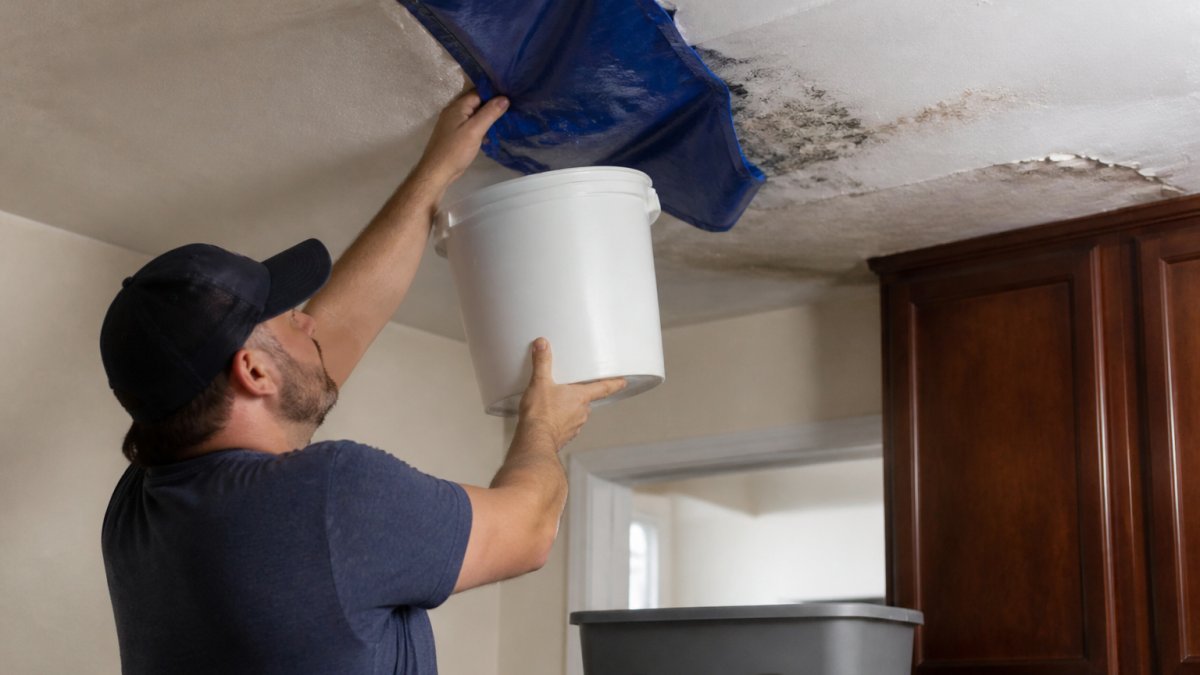
- Steady drip from the ceiling: Put a bucket under it, then lay plastic sheeting on the floor with edges run up the wall a few inches to form a shallow basin. This keeps water from wicking into baseboards and carpet pad.
- Brown or yellow stain that is growing: The drywall is already saturated. Put a bucket underneath, then poke a small hole (1/8 inch) at the stain's lowest point so water drains in a controlled stream instead of spreading sideways.
- Bulging, sagging, or water-filled ceiling: This is the dangerous one. Do not stand under it or poke it with your face beneath, a bulge can hold several gallons and release at once. Clear the room, lay plastic on the floor, then from the side make a small relief hole at the bulge's edge and drain it into a bucket. If the bulge is large or the ceiling feels spongy across a wide area, stay out and call a professional, that is a structural warning sign.
- Water running down a wall or inside a wall cavity: Assume wiring is wet. Kill the circuit, pull furniture and electronics away, and do not drill or probe the wall.
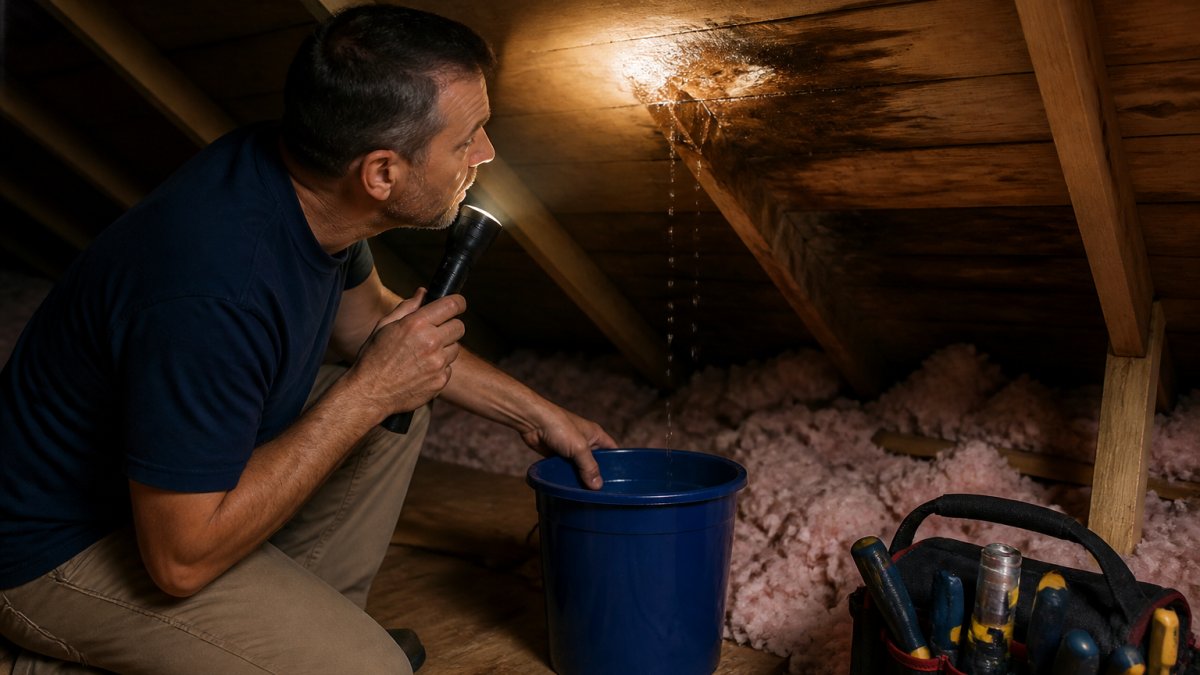
- Water in the attic: Do not walk the attic during a storm unless you have stable, dry footing and a light. Wet insulation and framing are slick, and attic wiring is often exposed.
3. Catch and channel the water. Use buckets under drips, towels or a wet/dry vacuum for standing water, and plastic sheeting to channel flow toward a drain or bucket.
4. Move and protect valuables. Take electronics, documents, artwork, and upholstered furniture out first. Elevate anything you cannot move on blocks or plastic and cover it with sheeting.
5. Start drying immediately. Mold can colonize wet drywall and insulation within roughly 24 to 48 hours, so the clock starts now.
6. Document as you go. Photograph the drip, stain, bucket, and damaged belongings before cleanup.
How to Find a Roof Leak During Heavy Rain
Finding the exact source of a roof leak during heavy rain is challenging but essential. Water travels along rafters, insulation, and beams before dripping into your living space, so the spot where it enters is rarely directly below the actual hole.
Start in the attic or crawl space. Go up with a flashlight during the rain, look for water actively dripping or flowing, and follow it backward along beams and insulation to where it enters. Mark the spot with tape so you can find it again.
Check for common leak locations:
- Roof penetrations (where pipes, vents, or chimneys break through the roof)
- Flashing around skylights or dormers
- Valleys where two roof slopes meet
- Cracked or missing shingles
- Damaged gutters or downspouts
If you can't find the leak from inside, wait for the rain to stop, then carefully inspect the roof above where water is entering. Look for lifted shingles, cracks, holes, or deteriorated flashing. Wear safety gear and use a secure ladder.
Roof Leak Emergency Steps: Temporary Repairs You Can Do Now
Here is the honest version most guides skip: during active heavy rain, almost nothing you apply to a wet roof will bond properly. Adhesives, sealants, and tapes need dry or barely damp surfaces. So the real question is not which product to use right now, but what you can safely do now and what must wait for a dry window.
What Actually Works in Active Rain
A tarp is the only reliable wet-weather option, and only if you can install it safely. If the roof is steep, the wind is gusting, or you are not confident on a ladder, do not go up. No temporary fix is worth a fall. If conditions allow a safe, low-slope, edge-accessible install:
- Measure the damaged area and add 4 to 6 feet of overhang on every side.
- Run the tarp up and over the ridge if you can reach it, so water cannot get under the top edge.
- Secure it with cap nails or screws through furring strips or boards along the edges, not just grommets, which tear out in wind.
- Build in a slight slope so water runs off instead of pooling.
- Check it after the storm; a tarp that has shifted is worse than none because it can channel water into new places.
Interior water control is the other thing that genuinely works during rain. Relief holes, buckets, sheeting, and killing power to wet circuits do more in an active storm than any product applied to a wet roof.
What Should Wait for a Dry Surface
Roofing cement and sealants. These need a dry or nearly dry surface to cure and bond; on a wet, dripping roof most will wash out or fail within days. Apply after the rain stops and the surface dries, clear debris, work the cement into cracks with a caulking gun, smooth it with a trowel, and cure per the label (often around 24 hours).
Waterproof roofing tape. Tape is more forgiving than cement and can grab a slightly damp surface, but it is not designed for standing water or active flow. Use it as a quick seal on a small crack or nail head once the rain eases: clean the area, cut the tape 2 to 3 inches past the damage, press it down, and hold pressure for about 30 seconds. Expect weeks to a few months, not seasons.
Replacing or resealing shingles and flashing. Lifting shingles, reseating flashing, or replacing a pipe boot requires dry conditions and usually a professional. Doing it wet risks tearing shingles and creating a bigger opening.
Matching the Fix to the Leak
| Leak type | Best wet-weather action | Best dry-weather action |
|---|---|---|
| Small crack or nail-head drip | Tape if surface is only damp | Roofing cement, then tape |
| Missing or lifted shingle | Tarp over the area | Reseat or replace shingle |
| Flashing or pipe boot leak | Tarp, or interior control only | Reseal or replace flashing/boot |
| Large hole or widespread damage | Tarp if safely installable; otherwise interior control | Professional repair |
| Leak you cannot locate | Interior control and document | Professional inspection |
How to Stop a Roof Leak from Inside the House
If you can't access the roof safely or the weather is too severe, you can reduce water damage from inside. These methods won't fix the leak, but they'll protect your home while you wait for professional help.
Redirect water flow. If water pools in one area, use plastic sheeting or tarps to channel it toward a bucket or drain, preventing it from spreading across your ceiling and walls.
Increase ventilation. Open windows and doors and use fans to push humid air out. The faster you remove moisture, the less mold develops.
Monitor for electrical hazards. If water is near light fixtures, outlets, or your panel, turn off that circuit. Call an electrician if water has reached wiring.
Document the damage. Take photos and videos of water intrusion, stains, and damage. This helps with insurance claims and gives your contractor a clear picture.
Don't ignore small leaks. Even a slow drip causes significant damage over time as water seeps into insulation, framing, and drywall, creating conditions for mold and rot.
Safety Considerations During Active Storms
Your safety matters more than any temporary repair. Heavy rain makes roof work dangerous or impossible.
Never go on a wet roof. Wet shingles are slippery. Wind during storms makes falls likely. Wait for dry conditions, even if it means tolerating leaks for a few hours.
Avoid electrical hazards. Water conducts electricity. If it has reached your panel, outlets, or wiring, stay away and call a licensed electrician or your power company.
Don't use a ladder in high winds. Storm gusts can knock over a ladder. Wait for calmer conditions before climbing.
Secure your tarp properly. If you install a tarp during heavy rain, anchor it securely. A loose tarp becomes a hazard itself, flapping or blowing away.
Know your limits. If you're not comfortable at heights, don't attempt roof repairs yourself. A professional works safely and makes repairs that last.
What to Do After a Roof Leak: Next Steps and Prevention
Once the rain stops and you've contained the water damage, focus on permanent repairs and prevention.
Call a roofing contractor. Describe the leak location, the damage you've found, and any temporary repairs.
Document everything for insurance. If a storm caused the leak, your homeowner's insurance may cover repairs.
Check your gutters. Clogged gutters cause water to back up and leak under shingles, so clean them regularly, especially after storms.
Inspect your roof regularly. Check your roof twice a year for cracked shingles, lifted edges, missing pieces, and deteriorated flashing. Catching damage early prevents leaks.
Consider a full roof inspection. If your roof is over 20 years old, it's nearing the end of its lifespan.
Roof leaks during heavy rain feel like emergencies because they are.
But temporary fixes are exactly that. Roofing cement, waterproof tape, and tarps buy time; they don't solve the underlying problem.
At Astro Roofing, we specialize in emergency roof repairs and permanent solutions. Our team has over 30 years of experience handling storm damage and roof leaks.
National Weather Service severe weather safety guidance
FEMA home repair and recovery resources
Insurance Information Institute homeowner coverage guide
Frequently Asked Questions
Can you fix a leaky roof while it's raining?
Temporary fixes like roofing tape, sealant, and tarps can be applied during light rain, but heavy downpours make it unsafe and ineffective. Wet surfaces prevent sealants from bonding properly, and climbing a roof in active storms risks serious injury. Focus on containing water indoors and stopping the leak from inside first. Once rain subsides, apply permanent repairs or call a professional roofing contractor.
How do you find where a roof leak is coming from?
During heavy rain, locate the leak by tracing water stains on your ceiling and attic. Water travels along rafters and framing, so the entry point is often higher than where it drips. Check flashing around pipes, vents, and chimneys, and inspect cracked or missing shingles. Mark the location with a marker or tape so you can find it again when the rain stops.
What should you do immediately when you notice a roof leak during heavy rain?
First, move furniture and valuables away from the leak. Place buckets or tarps under dripping water to prevent interior water damage. Open windows to improve ventilation and reduce moisture buildup that can cause mold. If water is near electrical outlets or wiring, turn off power to that area and avoid contact. Once the rain stops, inspect the roof from inside your attic to locate the source.
What is the best temporary fix for a leaking roof during heavy rain?
Roofing cement and waterproof tape work best on dry surfaces, so save these for after the rain stops. During active rain, a heavy-duty tarp secured with rope or bungee cords is your most effective option, it diverts water away from the damaged area. For pinhole leaks, waterproof tape can work in light rain if the surface is relatively dry. Permanent repairs require dry conditions and professional installation.